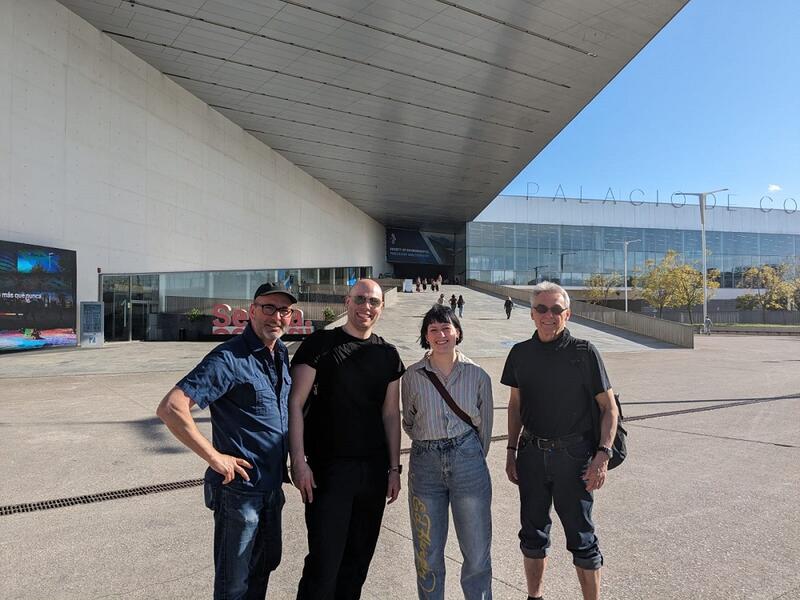

Vom 5. -9. Mai 2024 fand in Sevilla das 34. Jahrestreffen der „Society of Environmental Toxicology and Chemistry“ (SETAC) statt. Sie ist eine gemeinnützige, weltweite Organisation, die aus mehr als 16.000 Mitgliedern und 85 Partnerorganisationen in über 90 Ländern besteht und sich der Förderung der Umweltwissenschaften und des Umweltmanagements widmet. Die diesjährige Veranstaltung fand unter dem Motto „Wissenschaftsbasierte Lösungen in Krisenzeiten: Integration von Wissenschaft und Politik für Umweltprobleme.“
Folgende Themen standen im Fokus:
- Environmental and human toxicology: From molecules to organisms, from omics to in vivo.
- Ecotoxicology becomes stress ecology: From populations to ecosystems and landscapes
- Environmental chemistry and exposure assessment: Analysis, monitoring, fate and modelling
- Ecological and human health risk assessment of chemicals, mixtures and stressors and risk mitigation Strategies
- Life cycle assessment and foot-printing
- Environmental policy, risk management, and science communication
- Moving beyond - cross cutting themes, emerging and transdisciplinary topics
Prof. Dr. Edmund Maser, Universitätsklinikum Schleswig-Holstein (UKSH) in Kiel und PI in CONMAR sowie Dr. Guilherme Lotufo vom US Army Engineer Research and Development Center, Vicksburg, USA hatten sich erfolgreich für eine Vormittags-Session beworben mit dem Titel: „Legacy of War: Environmental Contamination, Ecotoxicity and Human Health Concerns of Explosives and Chemical Warfare Agents”.
CONMAR Beiträge:
- A. Beck: Monitoring environmental contamination from relic munitions in the Baltic Sea using lab-based methods and novel fieldable instrumentation
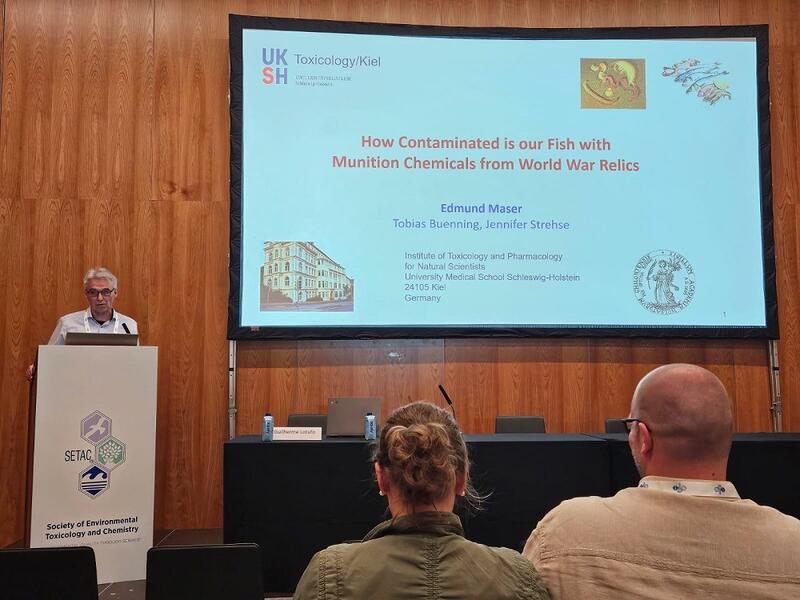
- E. Maser: How Contaminated is our Fish with Munition Chemicals from World War Relics
- M. Brenner, R. Schuster, I. Binder, T. Bünning, J. Strehse, E. Maser: Depuration Kinetics of TNT and its Metabolites in lab Exposed Blue Mussels (Mytilus edulis, L.)
- G. Lotufo, E. Maser, J. Strehse: Munitions at Sea: Making ecotoxicological sense out of a littered seafloor – spatial and temporal considerations
- K. Arinaitwe, A. Beck, M. Gledhill, J. Greinert, E. Achterberg: Spatial Distribution of WWII Legacy Munition Compounds in the Baltic Sea
- T. Bünning, J. Strehse, E. Maser: Ecotoxicological risk of World War relic munitions in the sea after low and high order blast in place operations
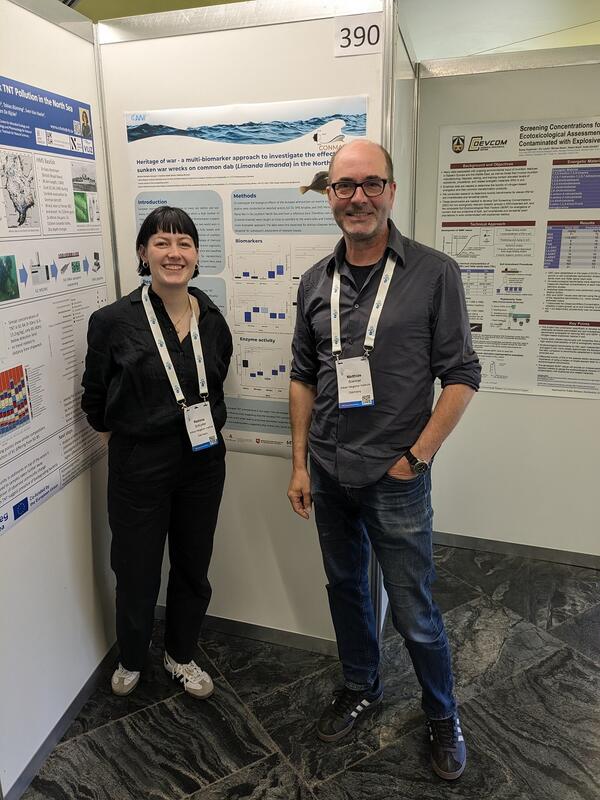
- R. Schuster, F. Binder, M. Brenner: Heritage of war - a multi-biomarker approach to investigate the effects of sunken war wrecks on common dab (Limanda limanda) in the North Sea
- W. Schütte, J. Van Landuyt, J. Strehse, T. H. Bünning, S. Van Haelst, K. Parmentier, E. Maser, N. Boon, M. De Rijcke Bacterial clues of shipwreck TNT pollution in the North Sea
- R. Schuster, F. Binder, M. Brenner: Biological effects of munition left on war wrecks on the health of blue mussels (Mytilus edulis, L.) in the North Sea
Edmund Maser, UKSH & Matthias Brenner, AWI