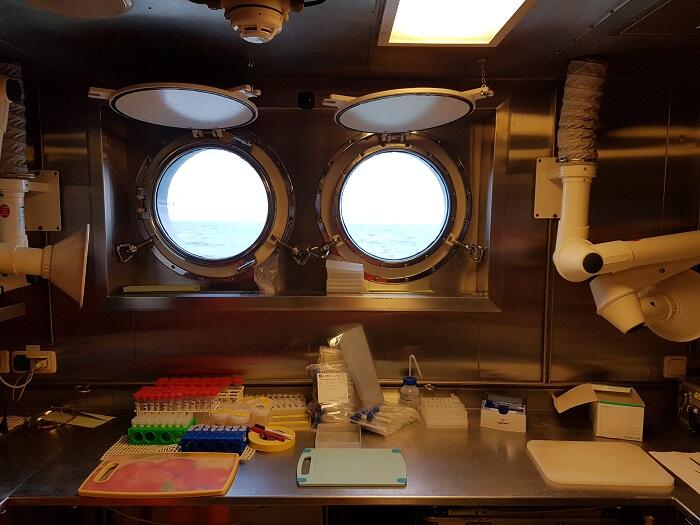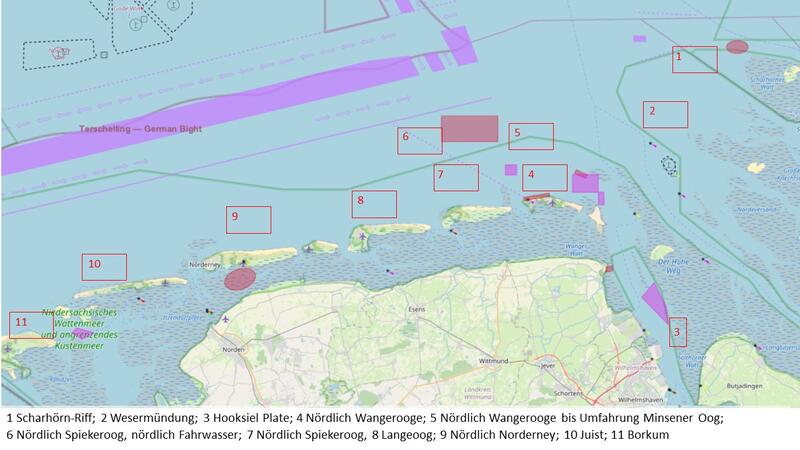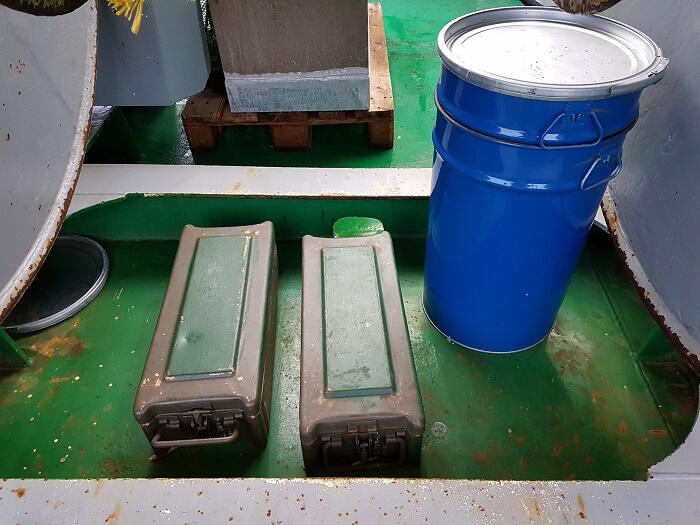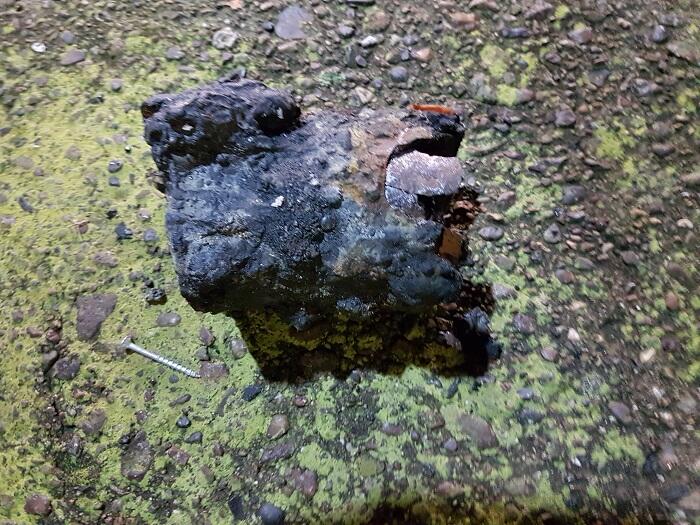

According to archive research, enormous amounts of munition (>300 000t, amucad.org) were dumped in the Northern Jade estuary after WWII. Due to ongoing corrosion of the dumped munition, leakage of harmful munition compound to the marine environment is expected. The SOLEA cruise 816, January 16-27 2023 (pic 1) aimed at the historically first sampling of fish (common dab, Limanda limanda) and water samples for munition compounds in close proximity to the North Sea Jade area dumped munition (see map). Before the start of the cruise, crew members and scientific staff received a briefing from the Lower Saxony explosive ordnance clearance service. Experienced ordnance clearers explained how to deal with munition that might be picked up with bottom beam trawls and left containers for the storage of munition items on board (pic 2). Due to heavy storm, the start of the cruise from Cuxhaven was delayed by one day. First sampling at Scharhörn reef was complicated by bad weather and half of the scientific staff being seasick. Sampling was continued at the outer Jade region near dumped munition and 30 dabs were successfully investigated and sampled for body fluids (blood, urine, bile) and tissues (liver, spleen, kidney, muscle, gill) for later laboratory chemical analysis for residual munition compounds such as TNT (trinitrotoluene). Bad weather and technical problems forced the ship to search protection in the harbour of Wilhelmshaven, due to high professionalism of the crew, the cruise was continued instantly and more sites around the Jade estuary and further west along the German coast up to the Ems estuary were sampled. On the way back to Cuxhaven, last sampling in the Jade estuary yielded a corroded chunk of munition, the bottom part of a 8.8 cm munition shell which contained residuals of the propellant, indicating the it was a dumped (not discharged) munition item (pic 3). Visible inspection of fish for diseases on board did not reveal any obvious health issues of dab collected near munition dump sites in comparison with control sites without dumped munition. Samples from water and fish were transferred to participating laboratories (AWI, GEOMAR, UKSH, Thünen) and are currently processed for chemical analysis of potential residual munition compounds. Laboratory analysis will reveal if and to which extend fish are contaminated with munition compounds.
Joern Scharsack, Thuenen